
Understanding Roofing Change Orders: What Homeowners Need to Know
When undertaking a roofing project, change orders are one of the most common surprises homeowners encounter. A change order is an adjustment to the original project scope that typically results in added costs. While they're sometimes unavoidable, understanding what to expect can help you navigate them with confidence.
It's important to be prepared as a homeowner! Some contractors will charge high margins on change orders. When the change order is for something that needs to be fixed, it's hard to say no! We filled this article with info you can use to avoid being price gouged or bait and switched.
Things That Can Come Up
1. Requiring a New Roof Deck
Shingles and flat roofs are required by building codes to be installed into solid decks. If the roof currently has skip sheathing instead of a solid deck, it will need to be replaced with plywood. You can check this by looking in your attic—if you can see gaps between the boards from underneath, you likely have skip sheathing. This is very easy to check before the project starts, so it should never be a surprise.
Skip sheathing should be identified before your project begins. A contractor can easily verify this during the initial inspection, so there's no excuse for it to be discovered mid-project.
2. Layers
In some cases, contractors may discover additional layers of old roofing that need to be removed before proceeding. Building codes often limit the number of roofing layers allowed, so this is a necessary step to ensure compliance and long-term performance.
A roofer can usually tell the number of layers on a roof by inspecting it before the project begins. Occasionally it is not possible to tell without cutting open the roof. Cutting open the roof to check layers is called core sampling, and this is not a common practice in residential roofing.
21% of shingle roofs have more than 1 layer. Check out our change order cost quiz for real examples of what additional work can cost.
3. Dry Rot
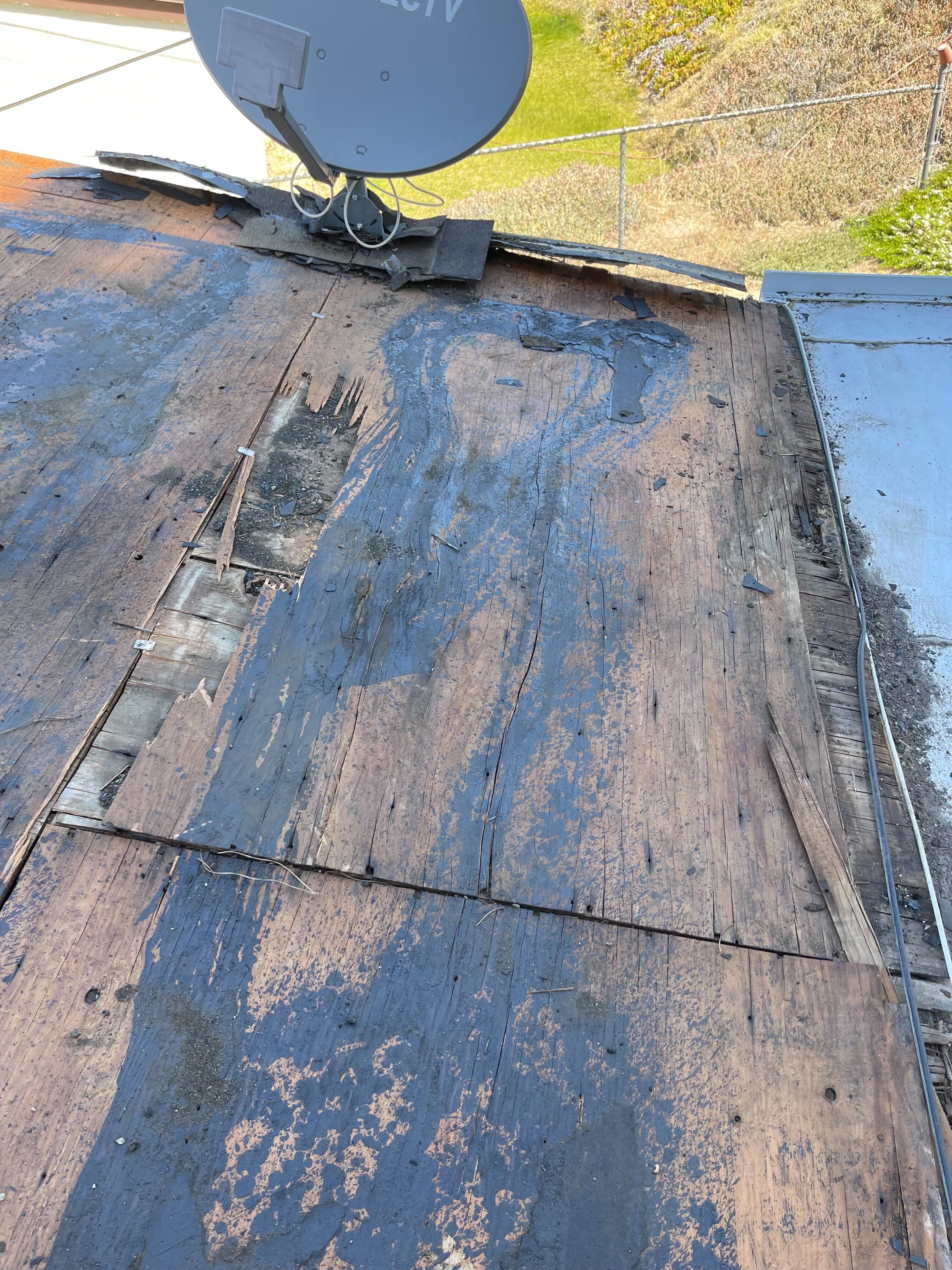
Dry rot is a common issue, especially in homes located in wetter climates. It weakens wooden structures and can compromise the integrity of your roof. While much of the rot is hidden underneath the roof, some signs can be spotted before removal. For instance:
- Rot in visible wood areas like the fascia
- Sagging sections of the roof
- Evidence of previous leaks
Additionally, fascia boards themselves often show visible signs of damage that can hint at more extensive rot beneath. It's very important that you have clear expectations with your contractor about what will happen if rotted wood is discovered.
Later in this article, we'll get into some more details of how to be prepared before your project starts. Check out our change order cost quiz to see real examples of what dry rot repairs can cost.
Before signing a contract, walk around your property with your contractor and inspect visible wood elements. Ask about their process and pricing for wood repairs if rot is discovered.
4. Optional Upgrades
During the project, you may decide to add optional upgrades, such as:
- Replacing all the fascia
- Replacing skylights
- Adding gutters
- Upgrading to a full roof replacement instead of partial repairs
While these changes can enhance your home, they also increase costs.
How Often Do Change Orders Occur?
Change orders occur in about 1 in 3 roofing jobs. On 23% of jobs, a change order comes up while the project is underway. The likelihood varies by region, with homes in wetter climates being more prone to hidden issues like dry rot or water damage.
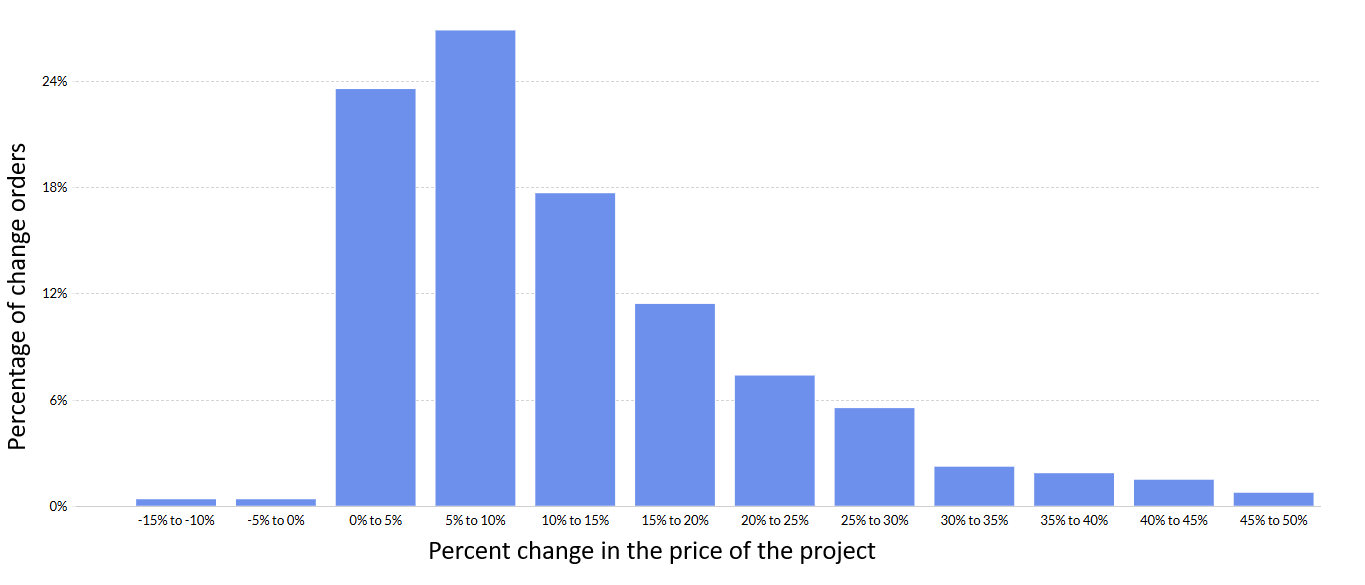
This chart shows the cost of change orders that have come up for over 1000 homeowners on their roofing projects. The cost is shown as a percentage of the total cost of their project. Remember, this just shows projects that had change orders. 2 out of 3 projects did not have any change orders at all!
View detailed data table
| Change Order % of Project Cost | % of Customers |
|---|---|
| -15% to -10% | 0.4% |
| -5% to 0% | 0.4% |
| 0% to 5% | 23.5% |
| 5% to 10% | 26.8% |
| 10% to 15% | 17.6% |
| 15% to 20% | 11.4% |
| 20% to 25% | 7.4% |
| 25% to 30% | 5.5% |
| 30% to 35% | 2.2% |
| 35% to 40% | 1.8% |
| 40% to 45% | 1.5% |
| 45% to 50% | 0.7% |
| 50% to 55% | 0.4% |
| 60% to 65% | 0.4% |
How Big Are Change Orders?
The good news is that most change orders aren't massive:
Additionally, larger change orders (over $2,500) often include optional work, such as:
- Replacing all fascia boards
- Adding or upgrading gutters
- Expanding the project from a partial to a full roof replacement
The odds of encountering a major change order over 15% of the project's cost are relatively low—around 5%.
Want to see what your roof project might cost, including potential change orders? Get quotes from contractors who provide transparent pricing upfront.
How to Address Change Orders
1. Identify What You Can Upfront
-
Make sure the attic is checked before the start of the project - This allows the contractor to inspect the underside of the roof deck for visible damage, rot, or moisture issues.
-
If there is rotted wood you want replaced, ask to have that included in the estimate - Don't wait for it to be discovered during tear-off when you have less negotiating power.
Ask your contractor to perform a thorough pre-project inspection, including checking the attic, looking for visible fascia damage, and identifying the number of existing roof layers.
2. Have a Plan for What Happens If Additional Work Is Discovered
-
Ask the contractor for details on how they charge for wood repair - They should have a price breakdown for different types of wood being replaced. Some contractors will quote an hourly labor rate and charge that labor rate for repairs plus the cost of materials. While this leaves some room for abuse by the contractor, this is a standard practice and does not mean your contractor is dishonest.
-
Make sure the process for how change orders will be handled is agreed to in writing - This protects both you and the contractor by setting clear expectations.
-
Make sure you have a plan for how to pay for additional work that comes up - If you are financing the project, you can usually increase the amount financed if additional work comes up.
Never proceed with a roofing project without a written agreement on how change orders will be priced and approved. This is your best protection against surprise costs and unethical pricing.
Final Thoughts
Change orders are a normal part of roofing projects, but understanding what to expect can make the process far less stressful. By catching issues early, preparing for unexpected costs, and maintaining open communication with your contractor, you can ensure your roofing project is completed smoothly and without unnecessary surprises.
Key Takeaways:
- Two-thirds of roofing projects have no change orders at all
- Most change orders are relatively small (under 10% of project cost)
- Many surprise costs can be identified before the project starts with a thorough inspection
- Having a written agreement on change order pricing protects you from being taken advantage of
- Being prepared financially for potential changes reduces stress during the project
Remember, a reputable contractor will be transparent about potential issues, provide fair pricing for unexpected work, and communicate clearly throughout the project. If a contractor seems evasive about change order policies or refuses to put pricing in writing, that's a red flag.
Ready to find contractors with transparent pricing? Request quotes here to compare bids from contractors who include clear change order terms.